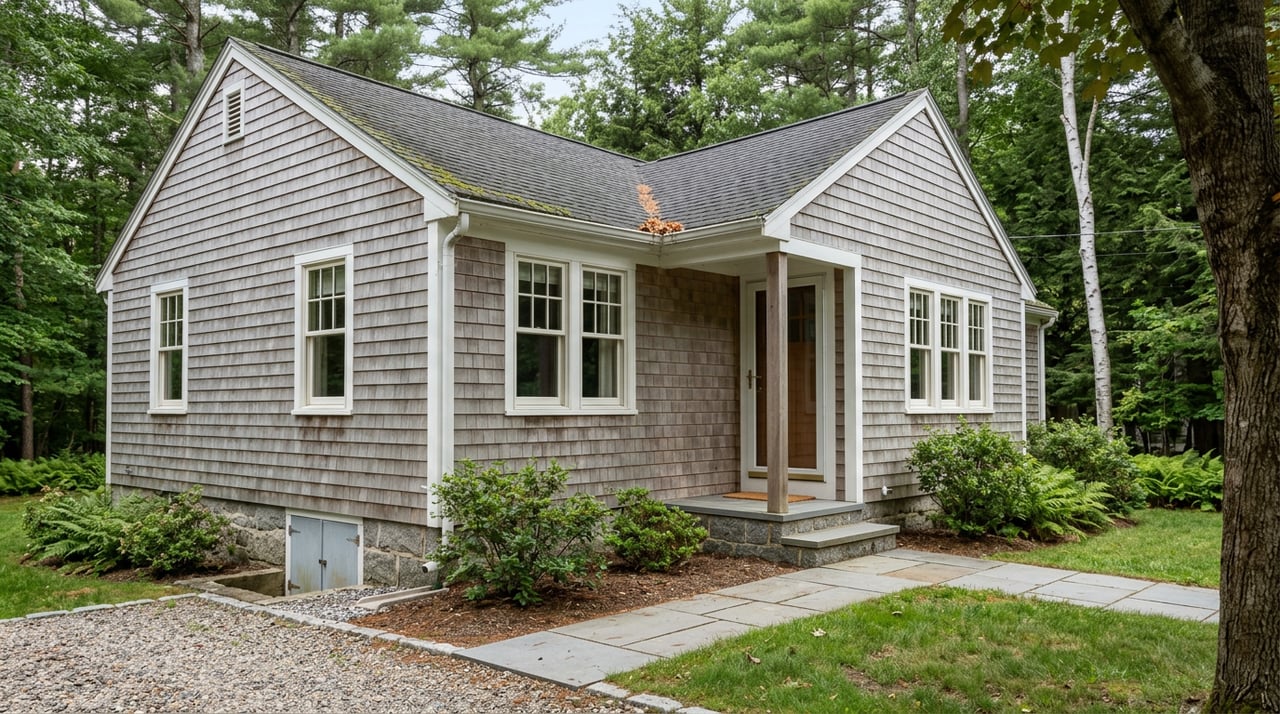
You found a classic Wolfeboro cottage that steals your heart, but you also see the work ahead. Older lake homes can be incredible buys if you plan smart. In Wolfeboro, permits, shoreland rules, septic realities, and true repair costs shape what you can do and when you can do it. This guide gives you a clear path so you can buy with confidence, budget wisely, and protect your timeline. Let’s dive in.
Why renovate an older Wolfeboro home
An older home near Lake Winnipesaukee can deliver character, location, and the chance to add value with the right updates. You can tailor spaces to your style while keeping the lakeside feel that drew you in. Many buyers refresh roofs, systems, and baths first, then focus on kitchens and outdoor living.
The key is to balance vision with rules, site limits, and costs. With a smart plan, you can avoid surprises and stay on schedule.
Permits and shoreland rules you must know
Inside 250 feet of the water
New Hampshire’s shoreland law sets strict protections near water. If the property sits within 250 feet of the lake’s reference line, your project lives in the “protected shoreland.” That affects what you can remove, where you can build, and how fast permits move. Review the state’s overview of the Shoreland Water Quality Protection Act to understand the buffers and vegetation standards in this zone. You can start with the state’s summary of RSA 483‑B shoreland protections.
In Wolfeboro, you will also work within local shorefront rules. Many lakefront projects need both New Hampshire Department of Environmental Services (NHDES) approvals and local approvals. The town ties its building permit process to those state steps for properties near the shore. See the town’s building permit guidance and the local Shorefront Residential District standards for setbacks, frontage, and shoreline structures.
Septic approvals and expansions
Older cottages often have older or undersized septic systems. If a system is failing or you plan to increase bedrooms or wastewater flow, NHDES approvals are usually required. Designs must be prepared by a permitted designer, and approvals can affect timing and scope. Read the state’s septic rules in the Env‑Wq 1000 series so you know what to expect.
Inspection focus: what matters most in older cottages
Foundations and structure
You will see fieldstone or rubble foundations in many older homes. Look for loose mortar, bulging, dampness, or wood sills in contact with wet masonry. Historic stone can often be repaired, but methods and costs vary. A structural engineer or historic mason should scope the fix and provide a written estimate. For background on compatible repair approaches, review the National Park Service’s Preservation Briefs.
Roofs, attics, and ice dams
Roof life varies, but asphalt shingles often last 15 to 30 years depending on product and exposure. In winter, ice dams are common when attics lack insulation or ventilation. Ask your inspector to check for air leaks, insulation levels, and past leak stains. The Department of Energy’s attic and insulation guide explains how air sealing and insulation lower ice‑dam risk. See the DOE’s home insulation guide.
For budgeting, typical asphalt roof replacements for average homes often land in the low to mid five figures, with complex roofs or metal costing more. Review typical ranges from roof replacement cost guides.
Septic systems and private wells
Ask for all septic records and plan an on‑site evaluation during inspections. For private wells, order a buyer’s water test panel with bacteria, nitrate, arsenic, lead/copper, and radon in water. NHDES provides a recommended buyer list and certified labs. Use the state’s well water testing recommendations to set your scope.
Electrical and insurance
Older wiring such as knob‑and‑tube or certain early aluminum wiring can be a safety concern and an insurance hurdle. Have a licensed electrician assess service size, panel condition, and visible wiring type. Many insurers require modernization before binding coverage. See what inspectors flag most often in this home inspection checklist.
Heating systems and conversion options
Many older homes run on oil or propane. If you plan to switch to heat pumps, budget for possible panel upgrades and multiple indoor units. Cold‑climate heat pumps are common in New Hampshire and may qualify for incentives. Learn more about options and incentives from this overview of heat pumps in New Hampshire.
Budget ranges to plan for
Every site is different. Shoreland permitting, access, slope, and bedrock can change costs quickly. Use these broad ranges as planning guides, then get local quotes tied to your actual scope.
- Septic replacement for a 2–3 bedroom home: typical $9,000 to $26,000. Engineered or mound systems on constrained shorefront lots can be $30,000 or more.
- Well drilling and pump work: often $5,000 to $15,000 depending on depth and equipment. Treatment for arsenic, radon, or PFAS can add $1,500 to $10,000 or more.
- Roof replacement: asphalt often falls in the low to mid five figures for typical homes. Complex roofs or metal cost more. See national context from roof cost guides.
- Electrical rewiring: small cottages can be $5,000 to $20,000 or more depending on access and service upgrades.
- Foundation repairs: minor repointing can be a few thousand. Significant underpinning or partial rebuilds can be tens of thousands. Have a structural engineer price the fix.
- Heat pumps: plan roughly $5,000 to $20,000 or more depending on the number of zones and electrical upgrades.
- Kitchens and baths: modest, midrange updates often recover more at resale than ultra high‑end overhauls. Keep finishes in line with local comparables.
Offer strategy and timeline control
Pre‑offer homework
- Ask for town and state files: septic designs and approvals, shoreland permits, and any prior building permits.
- Call the Wolfeboro Planning & Building office to confirm likely permits for your intended scope. Start with the town’s building permit form and instructions.
- Confirm whether the lot sits within the 250‑foot protected shoreland and whether a wetlands scientist’s letter will be required under local practice. Review the Wolfeboro shorefront standards.
Inspection period must‑dos
- Full home inspection plus specialists as needed: structural engineer for foundations, licensed electrician for wiring and panel, septic evaluator or designer for the system, and a buyer’s well water test following NHDES guidance.
- Get written, line‑item estimates from each specialist. Avoid relying only on a general contractor’s rough guess.
Protecting your offer
- Include septic and well contingencies when applicable.
- Add an electrical contingency if older wiring is suspected and confirm insurability with your carrier.
- Negotiate credits or an escrow for high‑probability fixes when inspections confirm a clear need, such as a failed septic.
Permitting and sequencing
- Plan for state shoreland permits and NHDES septic approvals when you map your schedule. These steps can add weeks or months and are often prerequisites for a town building permit within the shoreland zone.
- Start the state conversations during your inspection period when possible so you can plan closing and construction with fewer surprises.
Avoiding over‑improvement in Wolfeboro
Match your renovation scale and finishes to local comparables, both waterfront and nearby off‑water homes. Focus first on health, safety, and longevity items that buyers value: roof, insulation and air sealing, mechanical systems, and water quality. Then move to kitchens, baths, and outdoor living with a design that fits the cottage and neighborhood. Modest, well‑executed updates usually deliver better value than oversized, bespoke builds in smaller footprints.
Your next step
If you are eyeing an older Wolfeboro home with potential, get clear on rules, tests, and true costs early. A focused plan will save time, protect your budget, and keep the project moving. For a practical walk‑through of your short list and a renovation‑savvy game plan, reach out to Chip Hornbeek for local guidance.
FAQs
What does the 250‑foot protected shoreland mean for Wolfeboro buyers?
- If a home sits within 250 feet of the lake’s reference line, projects face added state and local standards for vegetation, setbacks, and structures. Expect state reviews under RSA 483‑B and to coordinate with Wolfeboro’s shorefront rules before the town issues permits.
Which inspections are most critical for older lake cottages?
- Prioritize foundation and roof assessments, electrical system reviews, septic evaluations, and a buyer’s well water test. These areas drive safety, budget, and insurability.
How much should I budget for a septic replacement near the lake?
- A typical 2–3 bedroom replacement often runs $9,000 to $26,000, with engineered or mound systems on constrained shorefront lots reaching $30,000 or more. Design and permits add time and cost.
Will knob‑and‑tube wiring affect my insurance or loan?
- It can. Many insurers require updates before binding coverage, and lenders may want proof of safe, modern wiring. Have a licensed electrician evaluate capacity, panels, and visible wiring early.
What about old oil tanks or switching to heat pumps?
- Old tanks can trigger insurance or lender requirements for documentation or remediation. If converting to heat pumps, budget for multiple indoor units and possible panel upgrades, and explore state incentives.
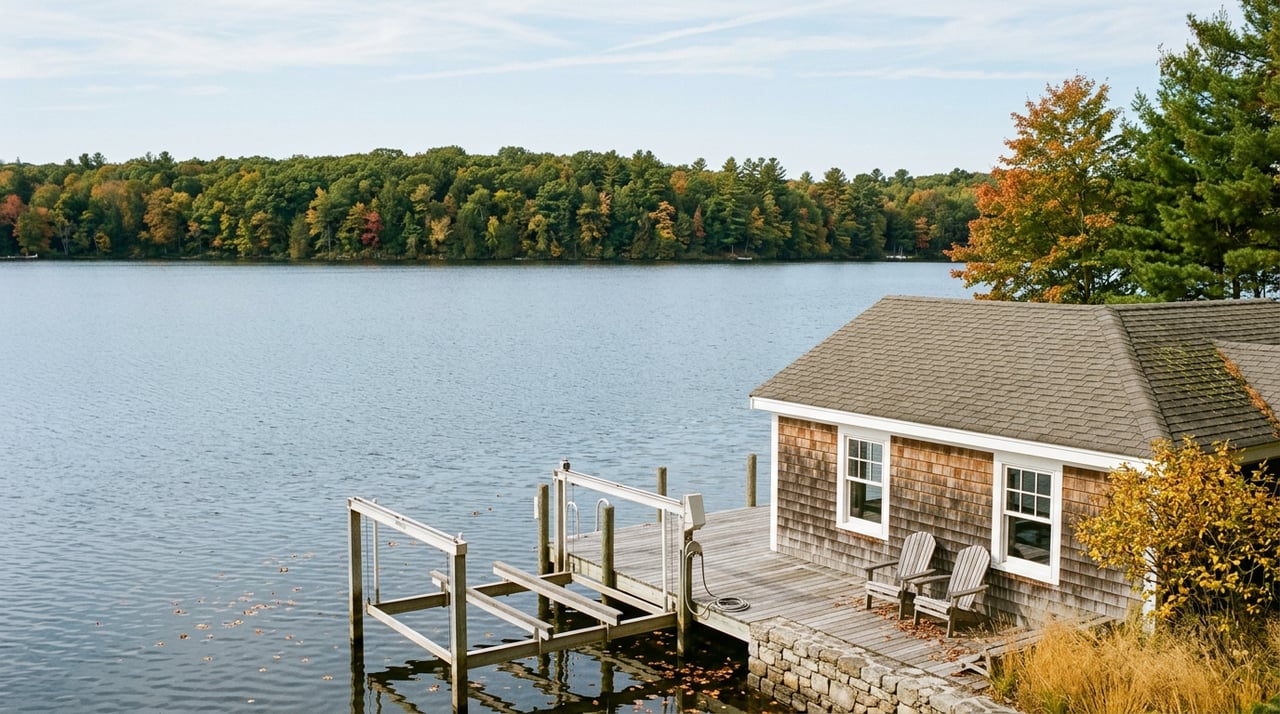
Do I need special permits for docks or boathouses in Wolfeboro?
- Many shoreline structures require both NHDES and town approvals. Start with Wolfeboro’s shorefront standards and call the Planning & Building office to confirm the process for your specific property.