Trying to choose between a Wolfeboro waterfront home and an in-town home? That decision is often less about square footage and more about how you want to live. In Wolfeboro, you are choosing between two very different day-to-day experiences in the same lake-centered town. This guide will help you compare lifestyle, upkeep, rules, and budget so you can move forward with more confidence. Let’s dive in.
Why this choice feels bigger in Wolfeboro
Wolfeboro is not just another small New Hampshire town. It is a lake-focused community on the eastern shore of Lake Winnipesaukee with about 6,700 year-round residents, a summer population topping 25,000, and roughly 58 square miles overall, including about 10 square miles of water.
That matters because both options come with real appeal. You can live close to the water, boating, and privacy, or you can live closer to the village core with shops, public docks, eateries, parks, and trails nearby. In many towns, these lifestyles are farther apart. In Wolfeboro, they sit side by side.
Waterfront homes: what you gain
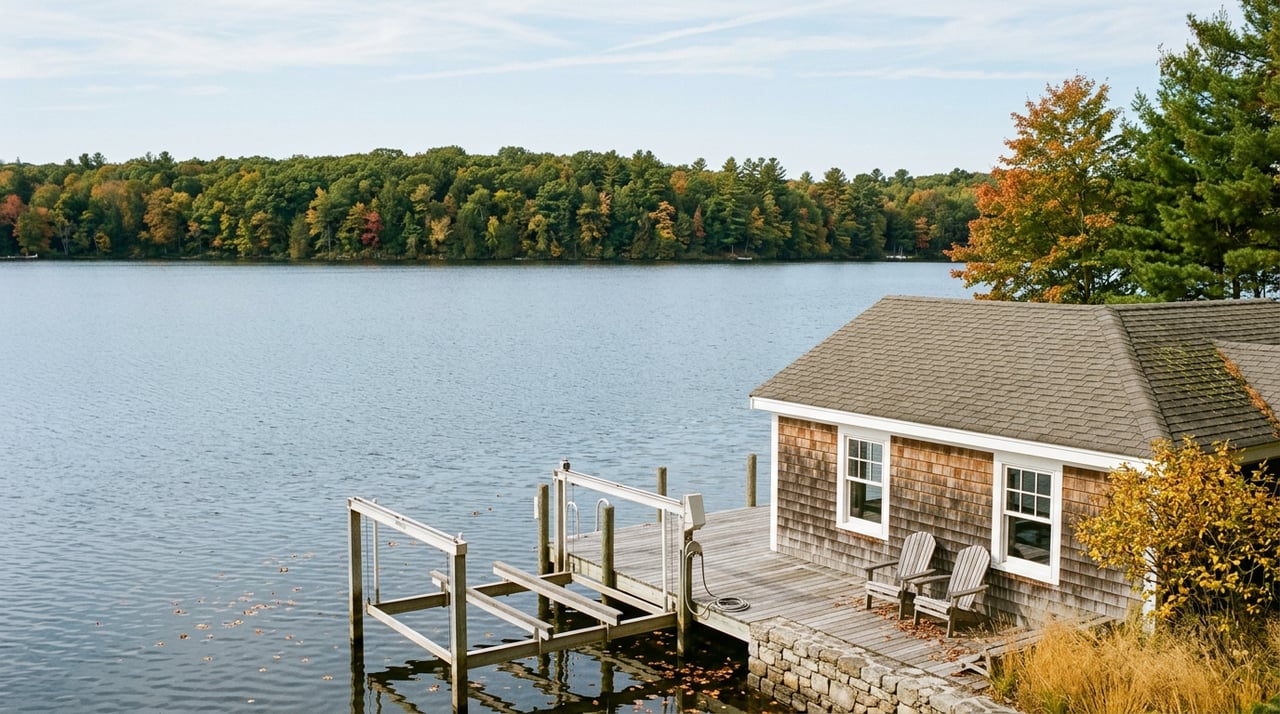
A waterfront home in Wolfeboro puts the lake at the center of your routine. For many buyers, that means direct access for boating, swimming, entertaining outdoors, and enjoying open views from morning to night.
This option often feels more like a retreat. That fits Wolfeboro’s strong summer identity and the way many people use lake property, whether as a full-time residence, a second home, or a seasonal escape.
Waterfront lifestyle advantages
If the lake itself is your top priority, waterfront can be hard to beat. You are buying more than a home. You are buying access, setting, and a certain pace of life.
Common advantages include:
- Direct water access
- Space for boating and swimming
- More privacy than many village properties
- Strong visual appeal from views and shoreline setting
- A classic Lake Winnipesaukee lifestyle
Waterfront inventory is limited
One practical point stands out in Wolfeboro. Waterfront supply is usually tight.
Current market snapshots show around 45 homes for sale in Wolfeboro overall, with only 7 waterfront homes in one recent waterfront search snapshot. When inventory is that limited, buyers often need to act with clarity and patience.
In-town homes: what you gain
If you picture yourself walking to coffee, strolling near the docks, or spending more time in the village center, an in-town home may fit better. Wolfeboro’s town profile highlights downtown shops, restaurants, bakeries, ice cream spots, public docks, Cate Park, and the Bridge Falls Path connecting downtown to Wolfeboro Falls along Back Bay.
In-town living usually trades private shoreline for convenience. For many buyers, that trade feels worth it because daily life can be simpler and more connected to the year-round rhythm of town.
In-town lifestyle advantages
An in-town home often supports easier everyday living. That can matter a lot if you plan to live in Wolfeboro full time or want less property management.
Common advantages include:
- Easier access to downtown amenities
- More walkability and village convenience
- A stronger year-round residential feel
- A wider mix of home styles, including historic houses and some condos or townhomes
- A more conventional maintenance profile in many cases
In-town options can be more varied
Current examples in the market include historic Colonials, New Englander-style homes, renovated village houses, and some condo or townhome inventory near the core. That variety can open more paths depending on your budget, renovation tolerance, and preferred layout.
For buyers who value character and practical livability, in-town homes often offer strong appeal. They can also be a smart fit if you want the Wolfeboro lifestyle without taking on shoreline-specific property issues.
The biggest question: how do you want to live?
The best choice usually starts with your daily habits, not the listing photos. A beautiful waterfront home can lose some shine if you do not plan to boat, swim, or spend much time outside by the water.
On the other hand, an in-town home may feel too removed if your real goal is to keep your boat close, entertain on the dock, and make the lake part of everyday life. This is why lifestyle fit should come before feature lists.
Waterfront may be right for you if...
- You want direct lake access
- You plan to boat, swim, or entertain outdoors often
- You value privacy and view corridors
- You are comfortable with more maintenance and property-specific due diligence
- You want a retreat-like setting in Wolfeboro
In-town may be right for you if...
- You want easier day-to-day living
- You like being near shops, dining, parks, and public spaces
- You want a home that feels more tied to Wolfeboro’s year-round village life
- You prefer more standard upkeep and fewer shoreline rules
- You are open to historic homes, renovated older homes, or smaller village properties
Waterfront ownership comes with more rules
This is where the decision gets very practical. In Wolfeboro, shorefront property is subject to local and state shoreland rules that can affect how you use, improve, or sell a home.
Within 250 feet of the reference line, protected shoreland rules apply. In the shorefront residential district, impervious surface coverage is capped at 30 percent, primary structures must be set back 50 feet, and there are buffer and tree-scoring rules within the 50-foot waterfront buffer and the 50-to-150-foot woodland buffer.
What that means in real life
These rules can affect projects that seem simple at first glance. Adding onto a home, changing site coverage, adjusting vegetation, or planning shoreline improvements may require closer review than you expect.
If a property has or could have a boathouse on Lake Winnipesaukee, new boathouses need New Hampshire Department of Environmental Services approval and Planning Board special use approval, and they must meet size and height limits. That makes permit history and future plans especially important when you evaluate a waterfront property.
Waterfront sales can trigger septic review
This is one of the most important differences between waterfront and in-town ownership. When developed waterfront property with on-site septic is contiguous to or within 200 feet of water bodies, Wolfeboro cites RSA 485-A:39 and requires a site assessment study when the property is sold.
That does not mean every waterfront transaction is a problem. It does mean your due diligence needs to be more thorough, especially around septic, shoreland limits, and improvement potential.
In-town homes are usually simpler to maintain
In-town ownership is not maintenance-free, of course. Older homes can still need updates, and any property can involve repairs, utility questions, or driveway work.
Still, in-town homes are usually not dealing with shoreline-specific setbacks, buffer restrictions, vegetation rules, or waterfront septic transfer requirements. For many buyers, that simpler ownership profile is a major advantage.
Wolfeboro also maintains substantial public infrastructure, including 68 miles of roads, sidewalks, snow and ice control, dock maintenance, and town water and sewer infrastructure with about 2,400 service connections and 200 seasonal connections. Depending on the property, access to town services can make daily ownership more straightforward.
Budget: look beyond the purchase price
Price is part of the story, but carrying cost matters too. Realtor.com’s Wolfeboro overview shows a median sale price of about $648,000 and a median price per square foot of $390, but the real spread between waterfront and in-town homes can be much wider.
Recent examples show everything from more modest in-town homes to renovated village properties and high-end historic homes, while waterfront options range from seasonal cottages to major lakefront estates with docks, boathouses, and substantial shoreline. That wide range means you need to compare not just asking price, but also taxes, upkeep, and future work.
Taxes and ongoing cost
Wolfeboro’s 2025 tax rate is $8.36 per $1,000 of assessed value, billed semi-annually. Because waterfront homes often carry higher assessed values, their property tax bills can be significantly higher even at the same local rate.
You may also face higher ongoing costs with waterfront ownership because of shoreline maintenance, docks, site constraints, and property systems tied to the lot. In-town homes can still need investment, especially older ones, but the ownership costs are often easier to predict.
Resale value depends on different things
Waterfront and in-town homes do not usually win buyers over for the same reasons. That matters if you are thinking ahead about future resale.
For waterfront homes, resale tends to depend heavily on shoreline usability, dock or boathouse potential, permit history, lot quality, and view. For in-town homes, resale tends to lean more on renovation quality, overall condition, walkability, and access to downtown amenities.
Why local guidance matters here
This is where practical property knowledge can make a real difference. A waterfront lot may look impressive online, but the real value often comes down to details such as shoreland restrictions, usable shoreline, and what has already been approved.
An older in-town home may also offer hidden upside or hidden cost depending on how it was maintained or updated over time. In both cases, it helps to work with someone who can look past surface appeal and talk through how condition and setting affect value.
Questions to ask before you decide
If you are comparing Wolfeboro waterfront and in-town homes, keep these due-diligence questions in front of you:
- Is the property inside the 250-foot protected shoreland area?
- Are there dock, boathouse, or vegetation restrictions?
- If the home has septic, will the sale trigger a waterfront site assessment study?
- Is the property served by town water and sewer, or private systems?
- How much of your budget should go toward upkeep, not just purchase price?
- Are you buying for everyday convenience or direct lake access?
Which option is the better fit?
If your dream is built around boating, swimming, privacy, and a true lakefront setting, a waterfront home may be the right move. You will likely pay more and navigate more rules, but the lifestyle can be worth it if the lake is your priority.
If you want easier year-round living, village convenience, and a home that feels more connected to everyday Wolfeboro life, an in-town home may be the smarter fit. You can still enjoy public docks, parks, trails, downtown shops, and the town’s lake-centered energy without owning the shoreline itself.
The right answer is usually not about which category is better. It is about which one better matches the way you actually want to live, maintain, and use your home.
If you want help weighing waterfront complexity against in-town convenience, Chip Hornbeek can help you compare properties with a practical local eye and clear guidance tailored to Wolfeboro.
FAQs
What is the main difference between Wolfeboro waterfront and in-town homes?
- Waterfront homes center on direct lake access, privacy, and views, while in-town homes usually center on convenience, walkability, and easier day-to-day living near downtown amenities.
Are Wolfeboro waterfront homes harder to maintain than in-town homes?
- In many cases, yes. Waterfront homes often involve shoreland rules, buffer restrictions, septic-related questions, and more site-specific upkeep than in-town homes.
Do Wolfeboro waterfront properties have special building rules?
- Yes. Protected shoreland rules can apply within 250 feet of the reference line, including setback, impervious surface, and vegetation buffer requirements.
Can a Wolfeboro waterfront home sale require a septic site assessment?
- Yes. For developed waterfront property with on-site septic that is contiguous to or within 200 feet of water bodies, Wolfeboro requires a site assessment study when the property is sold.
Are in-town homes in Wolfeboro more affordable than waterfront homes?
- Often, but not always. In-town homes usually offer a wider price range, while waterfront inventory is limited and can command much higher prices because of shoreline access and lake setting.
Is a Wolfeboro in-town home still a good fit if you want to enjoy the lake?
- Yes. In-town owners can still enjoy Wolfeboro’s lake-centered setting through public docks, parks, beaches, trails, and downtown access near the water.