Tomorrow, a crew from SOLitude Lake Management will post treatment signs along Balmoral Channel and at Suissevale Marina in Moultonborough. They are chemically treating those waters for milfoil under a special permit from the state's Division of Pesticide Control. The Union Leader reports that nobody swims within 200 feet of the treated water for six hours after the application. Everyone else on the lake keeps boating right past.
If you are shopping for waterfront on Winnipesaukee this season, that sign matters more than it looks. It is a small, dated data point that answers a question most buyers never think to ask until they already own the dock: what is this specific cove's relationship with the water, and who has been paying to manage it.
The Lake Has One Confirmed Problem, and It Lives in the Coves
Winnipesaukee has exactly one confirmed invasive plant. Variable milfoil was first found in the lake in 1965, and it has never left. It needs strong sunlight to grow, which is why it thrives in shallow, sheltered water and struggles in the open lake. Paugus Bay in Laconia is a useful illustration: the bay is deep enough that milfoil only takes hold in its shallow coves, not across the open water, and it avoids high-traffic areas near marinas almost entirely.
That single fact explains why milfoil is not a lake-wide problem so much as a cove-by-cove one. The state and local watershed groups have documented infestations in specific, named locations: Smith Cove in Gilford, Back Bay in Wolfeboro, Smalls Cove and Minge Cove in West Alton, Green's Basin near Moultonborough and Meredith, and Paugus Bay itself in Laconia. If you are evaluating a property, the honest question is not "does Winnipesaukee have milfoil." It is "does this cove."
The Lake Winnipesaukee Alliance puts the stakes plainly for owners. Invasive plants like milfoil are expensive to manage and, in the group's words, have "the potential to lower property values."
What a Cove's History Actually Looks Like
Back Bay in Wolfeboro is the clearest example of what long-term management looks like in practice. The 34-acre bay has been treated for milfoil eight times since 1991, with seven of those treatments happening between 2005 and 2015, plus annual hand-pulling and suction harvesting that started in 2008. In 2018, the management approach changed: SOLitude treated the entire bay with ProcellaCOR, a newly registered herbicide far more selective than earlier chemistries. A post-treatment survey found no viable milfoil left in the bay, with no measured harm to other plants or wildlife nearby.
That is nearly three decades of documented cove-specific work. It is exactly the kind of detail a listing sheet will never mention and a walk-through will never reveal, because by the time you are touring the house in July, the water usually looks fine. Whether it stays that way, and who is paying to keep it that way, is a fair thing to ask before you write an offer, not after you close.
The Rule That Only Applies Here
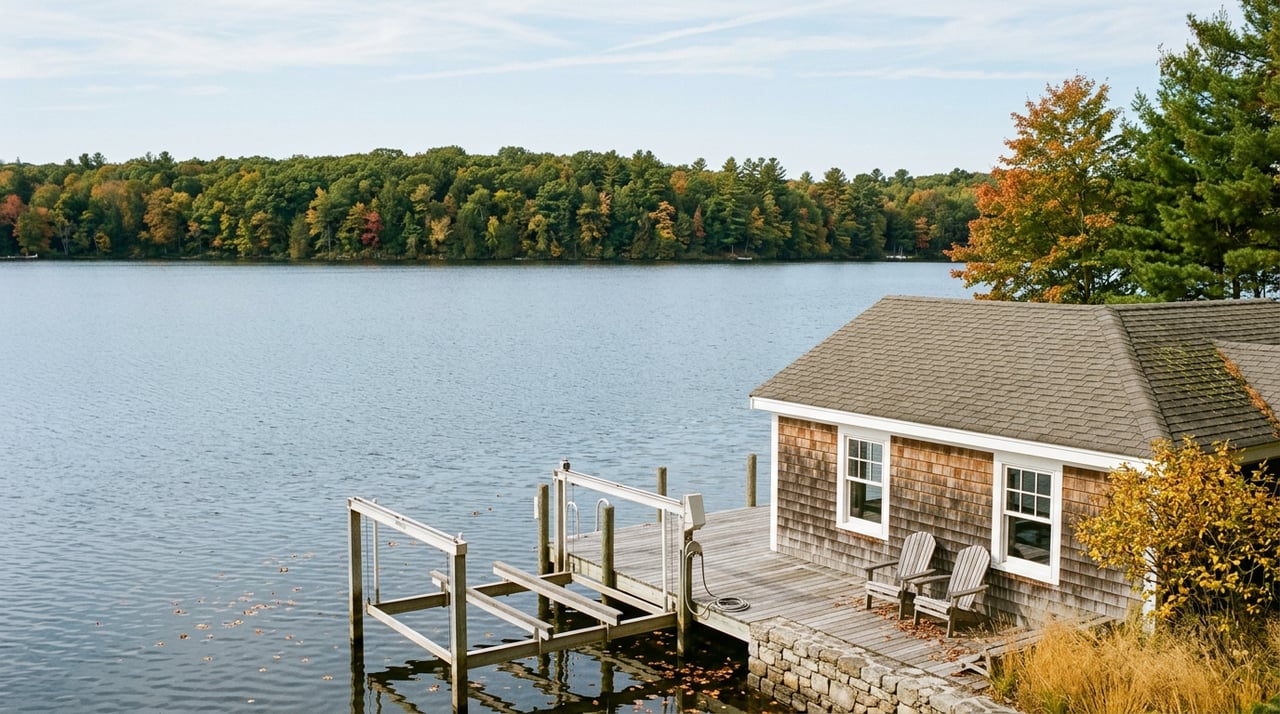
Winnipesaukee is also legally different from every other lake in New Hampshire in a way that directly shapes what you can build on your own shoreline. The New Hampshire Department of Environmental Services explains that state wetlands rules set standard boat slip dimensions based on the size of the waterbody, and only one lake in the state crosses the size threshold that unlocks the larger allowance.
| Waterbody size | Standard boat slip dimensions |
|---|---|
| 10,000 acres or less (every other NH lake) | 20 ft long, 6 ft wide, 3 ft deep |
| Greater than 10,000 acres (Winnipesaukee only) | 25 ft long, 8 ft wide, 3 ft deep |
State rules also allow up to two feet of navigation space around each slip, measured at normal high water. It is a small difference on paper, but it means the dock and slip math that applies to a buyer's last lake house on Squam or Sunapee does not simply carry over here.
What Your Frontage Actually Buys in Slips
The bigger constraint for most waterfront buyers is not slip size but slip count.
The New Hampshire Governor and Council agenda records a real case from late last year that shows how this plays out. On Dale Island in Meredith, an owner with an average of 312 feet of frontage along Winnipesaukee applied to rebuild and reconfigure a docking system, converting seasonal wharves to permanent, piling-supported structures. The state's own findings on that application spell out the math: 312 feet of frontage allows a maximum of five slips under the frontage rule, and the project was approved for exactly five. The state also flagged it as a "major impact" project specifically because it involved five or more slips on one frontage, which triggers a higher level of review than a simple seasonal dock replacement.
For a buyer, the lesson generalizes past this one property. Before you assume a listing's frontage supports the boat count you want, get the frontage measured and check it against the slip table yourself.
Five Questions Worth Asking Before You Write the Offer
- What is the surveyed shoreline frontage, not the assessor's estimate, and how many slips does that support under the state's frontage table.
- Is the existing dock permitted, registered, or simply grandfathered, and would any changes you want to make trigger full review.
- Has this specific cove had a documented milfoil or invasive species history, and if so, who has been funding the treatment.
- If treatment has occurred, was it herbicide, diver-assisted hand pulling, or both, and how recently.
- Are there active local groups, like a cove association or watershed group, that coordinate and cost-share ongoing management.
None of these questions will kill a good waterfront deal. They will tell you what you are actually buying into, beyond the dock and the view in the listing photos.
A Few Questions Buyers Ask Before They Offer
Does a treatment notice mean I can't swim all summer? No. The restriction tied to this week's Moultonborough treatment is limited to the area and period stated above. Lakes with active management plans still function as swimming and boating waters the rest of the season.
Can I just add a boat lift or jet ski lift without a permit? No. Installing a boat lift or jet ski lift, seasonal or permanent, requires a wetlands permit.
Winnipesaukee waterfront rewards buyers who look past the frontage number and the sunset photo and ask what the cove has actually been through. That is exactly the kind of groundwork Chip Hornbeek Realty walks clients through before they ever make an offer, drawing on decades of hands-on building and renovation experience alongside local lake knowledge. Contact Chip for a free Lake Market consultation before you write your next offer on the water.
This article is general information, not legal, tax or financial advice. Consult a qualified professional about your situation.